The field of robotics has witnessed remarkable advancements in recent years, particularly in the domain of autonomous cleaning devices. Among these, robotic vacuum cleaners, commonly known as robot vacuums, have emerged as a staple in modern households. However, the next frontier in this technology lies in the concept of collaborative movement algorithms—where multiple robots work in tandem to achieve efficient and intelligent cleaning. This approach not only enhances performance but also redefines how we perceive automation in domestic environments.
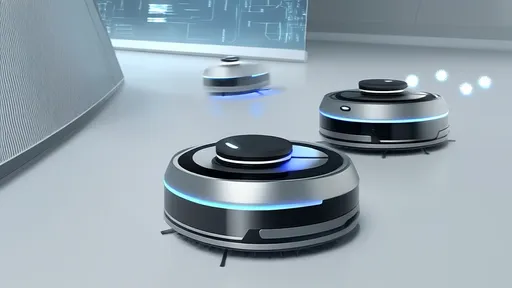
Traditional robot vacuums operate as solitary units, navigating through spaces with varying degrees of sophistication. While they have proven effective for single-room cleaning, their limitations become apparent in larger or more complex layouts. The idea of multi-robot collaboration seeks to address these shortcomings by enabling devices to communicate, share data, and divide tasks dynamically. Imagine a scenario where two or more robots map a home simultaneously, assigning zones to each other based on real-time assessments of dirt accumulation or obstacle density. This level of coordination could revolutionize cleaning efficiency.
One of the key challenges in developing collaborative movement algorithms is ensuring seamless communication between robots. Unlike industrial robots that operate in controlled environments, domestic robot vacuums must adapt to unpredictable settings. Researchers are exploring technologies such as mesh networking and ultra-wideband (UWB) positioning to facilitate real-time data exchange. These systems allow robots to maintain awareness of each other’s locations and avoid redundant work. For instance, if one robot detects a heavily soiled area, it can instantly relay this information to others, prompting a collective effort to tackle the problem.
Another critical aspect is the development of adaptive task allocation. In a collaborative system, robots must decide how to divide cleaning responsibilities without human intervention. Advanced algorithms analyze factors like battery life, proximity to charging stations, and the size of uncleaned areas to optimize task distribution. Some experimental models even employ machine learning to predict high-traffic zones over time, allowing the robots to prioritize those areas during subsequent cleaning cycles. This level of autonomy not only improves efficiency but also extends the lifespan of each unit by balancing workloads.
The potential applications of collaborative robot vacuums extend beyond residential use. Commercial spaces, such as offices or retail stores, could benefit immensely from teams of robots working in unison. Large open areas, which are typically time-consuming for a single robot to clean, could be covered in a fraction of the time with a coordinated approach. Moreover, the integration of IoT sensors and smart building systems could enable robots to adapt their schedules based on foot traffic patterns, ensuring minimal disruption during peak hours.
Despite the promise of this technology, there are hurdles to overcome. Consumer adoption may be slow initially, as people grow accustomed to the idea of multiple robots operating in their homes. Privacy concerns related to data sharing between devices also need to be addressed. Manufacturers must ensure that communication protocols are secure and that user data remains protected. Additionally, the cost of deploying a multi-robot system could be prohibitive for some, though economies of scale may eventually make it more accessible.
Looking ahead, the evolution of collaborative movement algorithms for robot vacuums could pave the way for broader innovations in home automation. The principles being refined in this context—such as decentralized decision-making and real-time coordination—could be applied to other robotic systems, from lawn mowers to security drones. As artificial intelligence continues to advance, the line between standalone devices and interconnected robotic ecosystems will blur, creating a future where machines work together seamlessly to enhance our daily lives.
The journey toward truly collaborative robot vacuums is still in its early stages, but the progress so far is undeniably exciting. By combining cutting-edge hardware with sophisticated software, researchers and engineers are pushing the boundaries of what autonomous devices can achieve. For consumers, this means the prospect of cleaner homes with less effort. For the tech industry, it represents another step toward a more interconnected and intelligent world.
By /Aug 6, 2025

By /Aug 6, 2025

By /Aug 6, 2025

By /Aug 6, 2025

By /Aug 6, 2025

By /Aug 6, 2025

By /Aug 6, 2025

By /Aug 6, 2025

By /Aug 6, 2025

By /Aug 6, 2025

By /Aug 6, 2025

By /Aug 6, 2025

By /Aug 6, 2025

By /Aug 6, 2025

By /Aug 6, 2025

By /Aug 6, 2025

By /Aug 6, 2025

By /Aug 6, 2025

By /Aug 6, 2025

By /Aug 6, 2025
