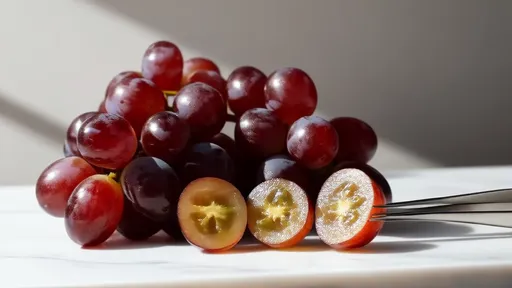
Grapes are a beloved snack for people of all ages, but their small size and smooth texture can pose a choking hazard, especially for young children. One effective method to minimize this risk is the cross-cutting technique, which involves slicing grapes into quarters and removing the seeds. This simple yet crucial step can make a significant difference in safety without compromising the fruit’s natural appeal.
The process of cross-cutting grapes is straightforward but requires attention to detail. Start by washing the grapes thoroughly under cool running water to remove any dirt or residue. Pat them dry with a clean towel to ensure a firm grip. Using a sharp knife, slice each grape vertically from the stem end downward, then rotate it 90 degrees and make another vertical cut. This creates four evenly sized pieces, reducing the grape’s round shape and making it easier to chew and swallow.
For seeded varieties, removing the seeds is an essential additional step. After cross-cutting, gently separate the quarters and use the tip of the knife or a small spoon to scoop out the seeds. While seedless grapes are more common today, older varieties or homegrown grapes may still contain seeds, so it’s always wise to check. The extra effort ensures that the fruit is safe for toddlers and even adults who may eat quickly or without full attention.
Beyond safety, cross-cut grapes offer practical benefits. The smaller pieces are easier for little hands to pick up, promoting self-feeding in young children. They also blend seamlessly into fruit salads, yogurt parfaits, or even as a topping for oatmeal, adding a burst of sweetness without the worry of choking. For parents and caregivers, this method provides peace of mind while encouraging healthy eating habits.
It’s worth noting that the cross-cutting technique isn’t limited to grapes. Other small, round fruits like cherries or cherry tomatoes can also benefit from this approach. The principle remains the same: reducing the size and altering the shape to mitigate choking risks. This adaptability makes the method a valuable tool in any kitchen, particularly those with young children or elderly individuals who may have difficulty swallowing.
While some might argue that cutting grapes diminishes their convenience, the trade-off for safety is undeniable. A few extra minutes spent preparing snacks can prevent accidents and create a safer eating environment. Moreover, the visual appeal of neatly quartered grapes can make them more enticing to picky eaters, turning a simple snack into an engaging and enjoyable experience.
In recent years, pediatricians and child safety advocates have emphasized the importance of modifying food shapes for young children. Grapes, in particular, have been flagged as a common choking hazard due to their size and slippery texture. The cross-cutting method aligns with these recommendations, offering a practical solution that’s easy to implement. Sharing this knowledge with other parents or caregivers can help spread awareness and reduce preventable incidents.
For those who frequently pack lunches or snacks on the go, pre-cutting grapes and storing them in airtight containers can save time. A quick rinse before serving ensures they stay fresh and crisp. This habit not only streamlines meal prep but also reinforces the importance of mindful food preparation. Over time, it becomes second nature, much like washing hands before eating or checking for allergens.
The cultural shift toward prioritizing food safety, especially for children, has brought techniques like cross-cutting into the spotlight. What was once a niche tip shared among parents is now a widely endorsed practice. Social media platforms and parenting blogs have played a significant role in disseminating this information, making it accessible to a broader audience. The simplicity of the method—no special tools or skills required—adds to its widespread adoption.
Ultimately, the goal is to enjoy the natural goodness of grapes without unnecessary risks. Whether served as a standalone snack or incorporated into recipes, cross-cut grapes exemplify how small adjustments can have a big impact. By adopting this practice, we honor the joy of eating while safeguarding the well-being of those we care for. It’s a reminder that safety and delight can coexist, one grape at a time.

By /Aug 11, 2025
By /Aug 11, 2025
By /Aug 11, 2025

By /Aug 11, 2025
By /Aug 11, 2025
By /Aug 11, 2025
By /Aug 11, 2025

By /Aug 11, 2025
By /Aug 11, 2025

By /Aug 11, 2025
By /Aug 11, 2025

By /Aug 11, 2025
By /Aug 11, 2025

By /Aug 11, 2025

By /Aug 11, 2025
By /Aug 11, 2025
By /Aug 11, 2025
By /Aug 11, 2025
By /Aug 11, 2025
By /Aug 11, 2025
